CRIP TIME CLOCK. 2025
-
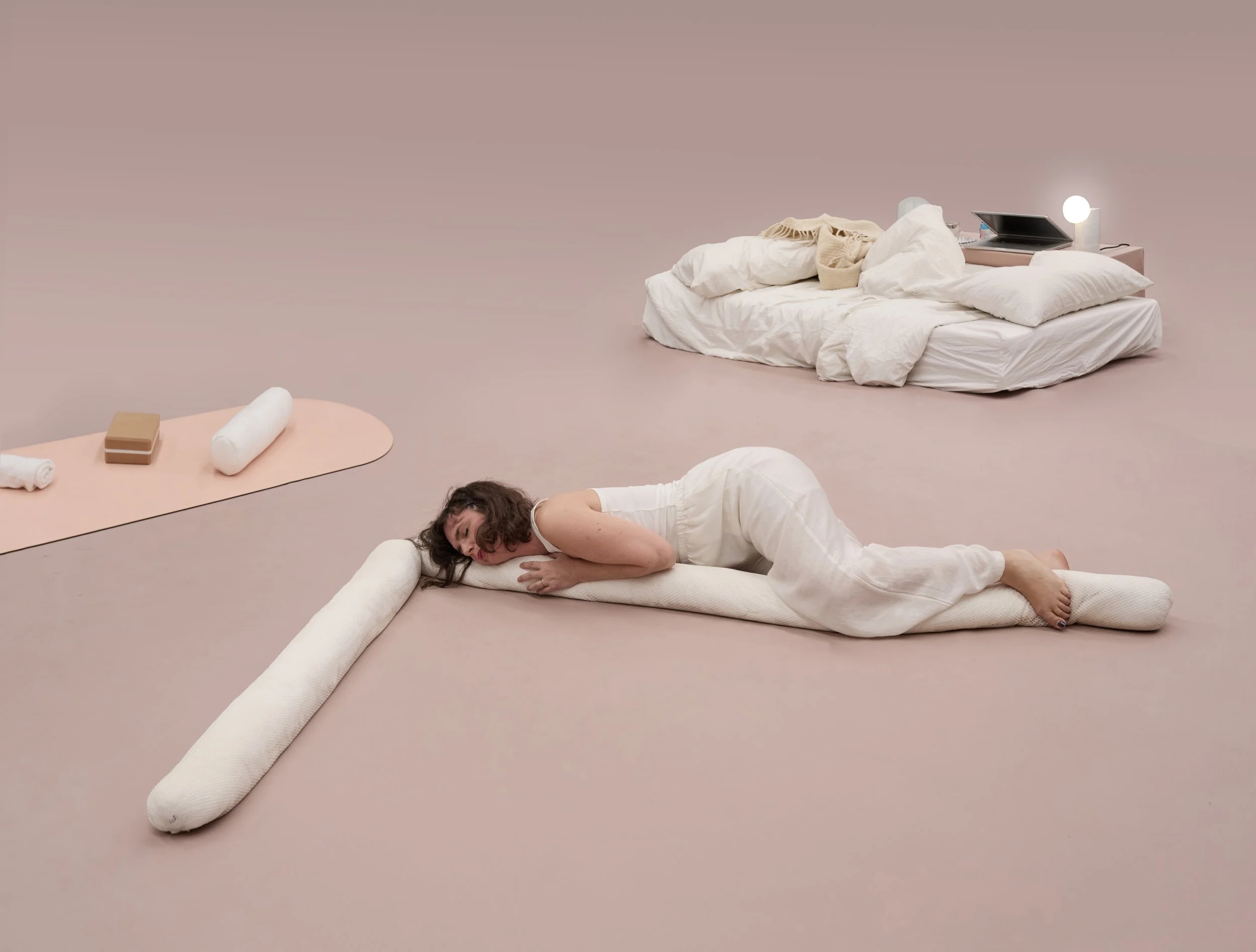
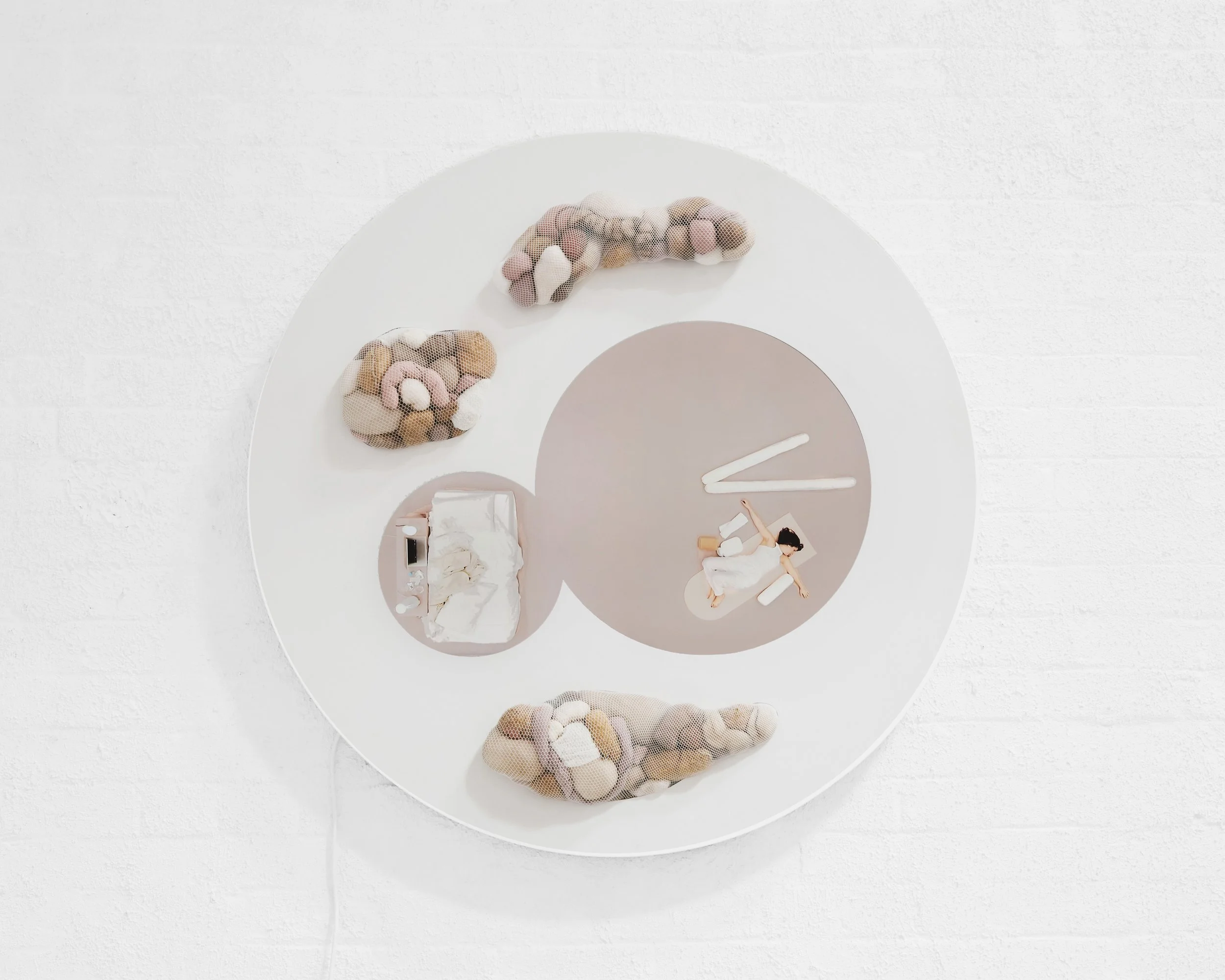
Drawing on crip time and feminist disability scholarship, I became interested in the clock not simply as a symbol of time, but as a familiar system through which time is standardised and made legible. Moving image became integral to the work because it allowed duration itself to be manipulated: time could be stretched, compressed, interrupted or repeated rather than simply measured. The installed work remains synchronised to real time but does not display it conventionally; instead, real time is encountered through the corresponding moment of the twelve-hour filmed workday.
The interviews also drew my attention to the domestic environments in which work was being negotiated. Working from home brought paid work into direct proximity with rest, care and the management of illness. I conceived the circular field of the clock as a cutaway domestic interior, as though the enclosing surface of a home had been removed and the viewer were looking into a working space from outside. A bed, laptop, yoga mat, hot water bottle, ice pack and medication occupy this space alongside the working body. These objects are not props, but part of the practical infrastructure through which work can be sustained when bodily capacity fluctuates.
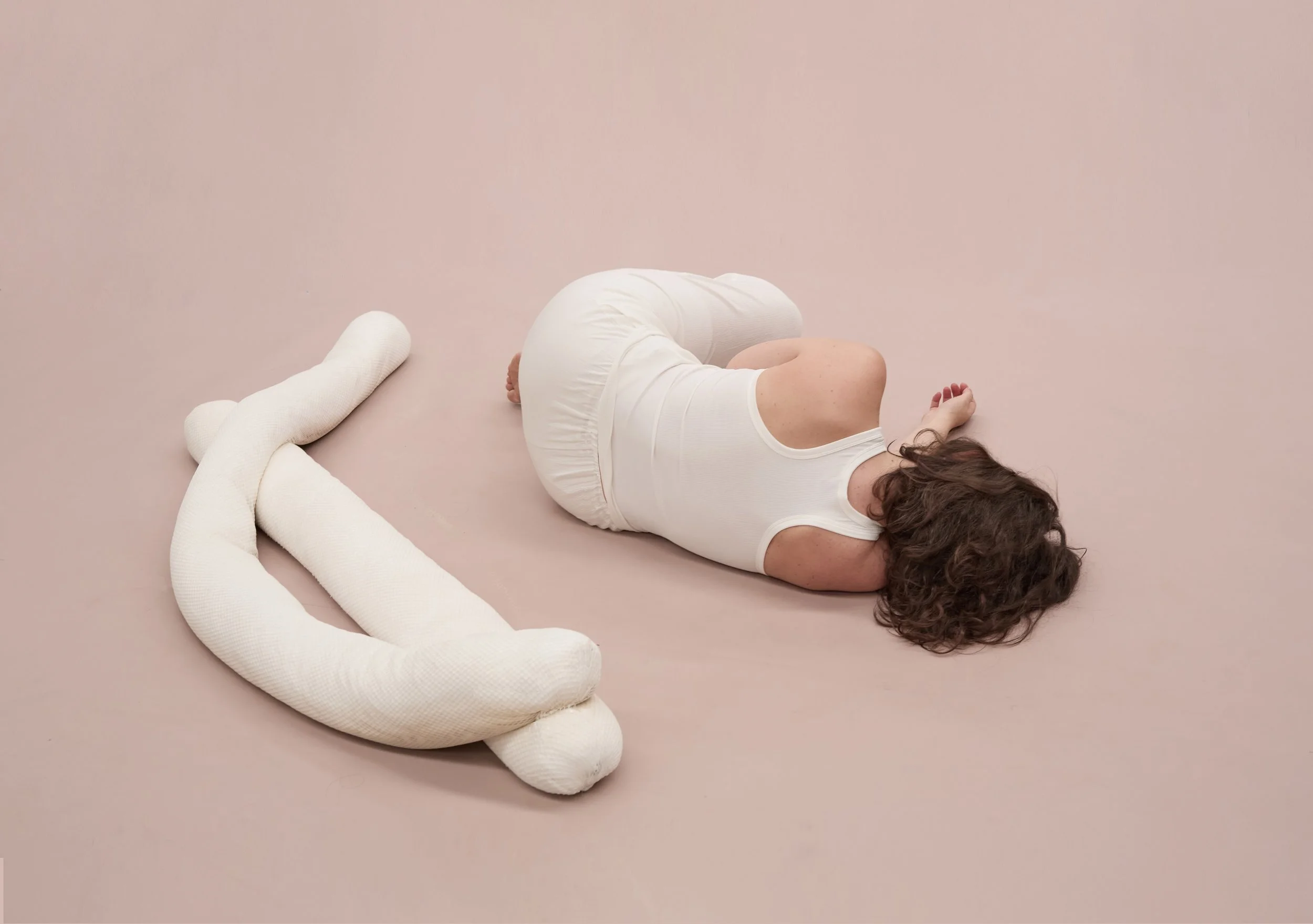
Within the larger clock face, a smaller inset forms what I call the “crip time pocket”, a space for withdrawal and rest. It interrupts the expected continuity of the clock, incorporating rest into its temporal structure rather than positioning it outside productive time.
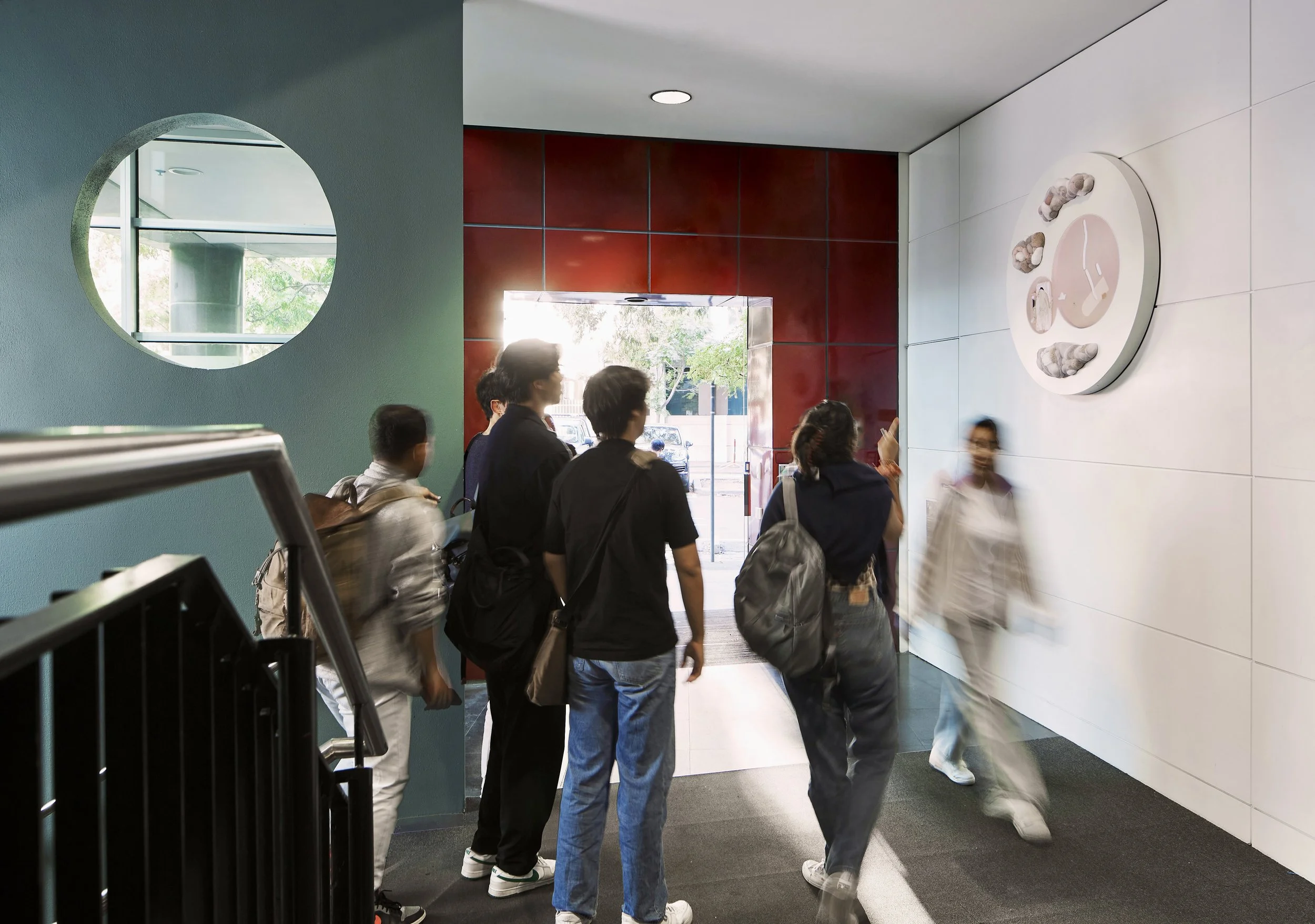
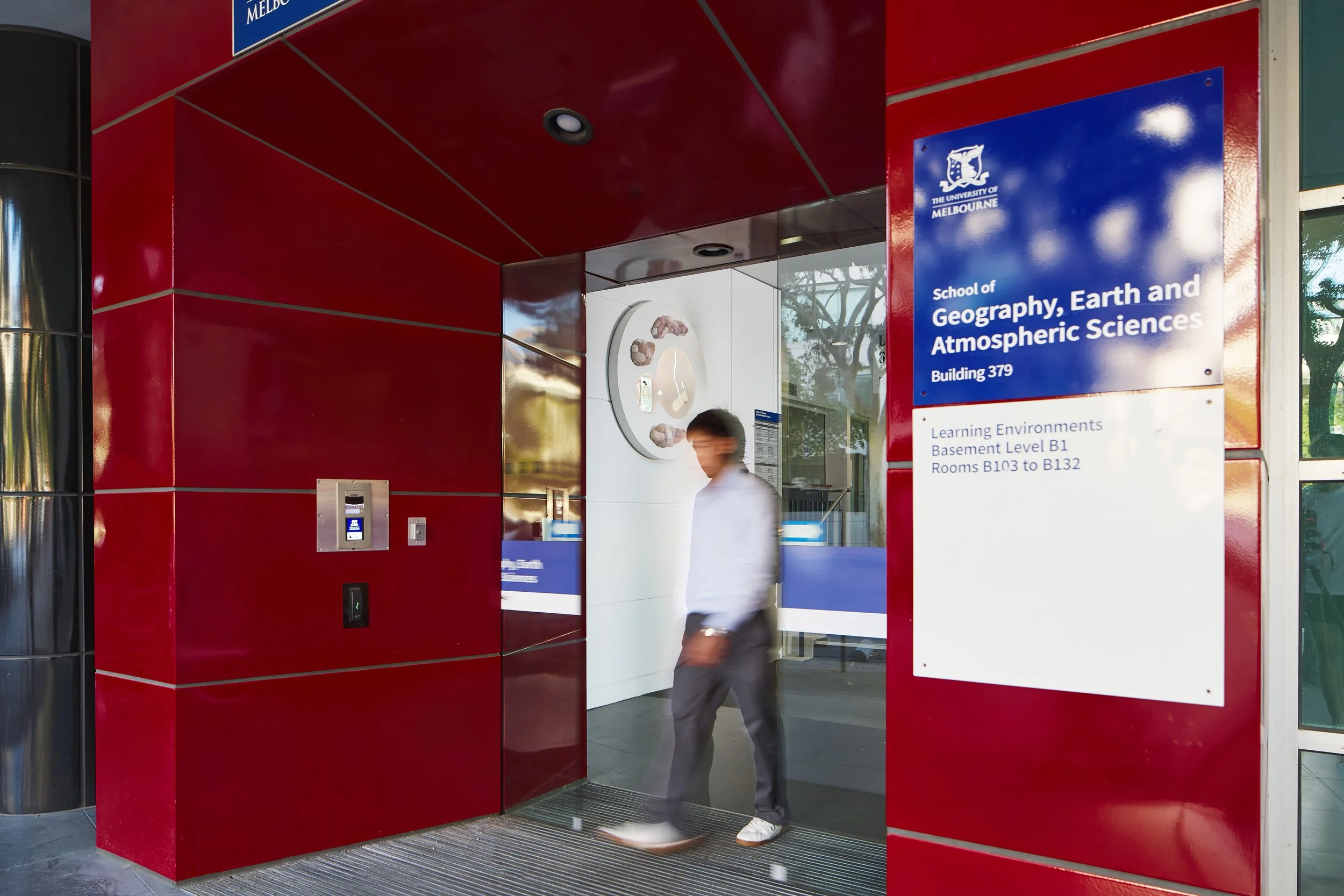
The commission is permanently installed at the entrance to the School of Geography, Earth and Atmospheric Sciences at the University of Melbourne. Its scale and circular geometry respond to the large openings in the building’s concrete architecture. Its position at the entrance also gives the work an everyday social role: students, staff and visitors repeatedly encounter something recognisable as a clock, synchronised to real time, yet requiring a different way of reading it. This slight disorientation creates an opening for conversation around how time, work and bodily capacity are organised and experienced.
Three soft, irregular textile forms press into the steel structure, introducing a yielding bodily presence into the clock’s fixed geometry. Together, these interventions allow Crip Time Clock to operate simultaneously as a timepiece, moving-image work and architectural object, giving form to the tension between normative working time and the changing temporalities of the body.
Acknowledgments:
Permanent installation at the School of Geography, Earth and Atmospheric Sciences (SGEAS), The University of Melbourne
Supported by the 2024 SGEAS Art-Science Engagement Initiative
Collaboration with Elisabetta Crovara and Jonathon Griggs
MATERIALS Powder coated steel frame, Samsung UHD Display screen
and Recycled Textiles
DIMENSIONS 1150mm diameter x 100mm depth